Challenging Our Brains at Surabaya European School
In the bright and dynamic classrooms of Surabaya European School (SES), learning often takes unexpected and playful forms. Recently, students embarked on a series of activities under the theme Challenging Our Brains. What may look like simple games with colourful blocks and chopsticks actually carried deeper lessons in resilience, focus, and collaboration — all of which are at the heart of the International Primary Curriculum (IPC) approach to learning.
These challenges were not just about building towers or moving tiny cubes. They were about nurturing life skills that help students grow into confident, adaptable, and reflective learners. Each task encouraged students to engage their minds, practise patience, and support one another, showing how fun and meaningful learning can be.
A Well-Rounded Approach to Learning Through Challenges
The activities were carefully designed to develop a broad range of skills and personal goals:
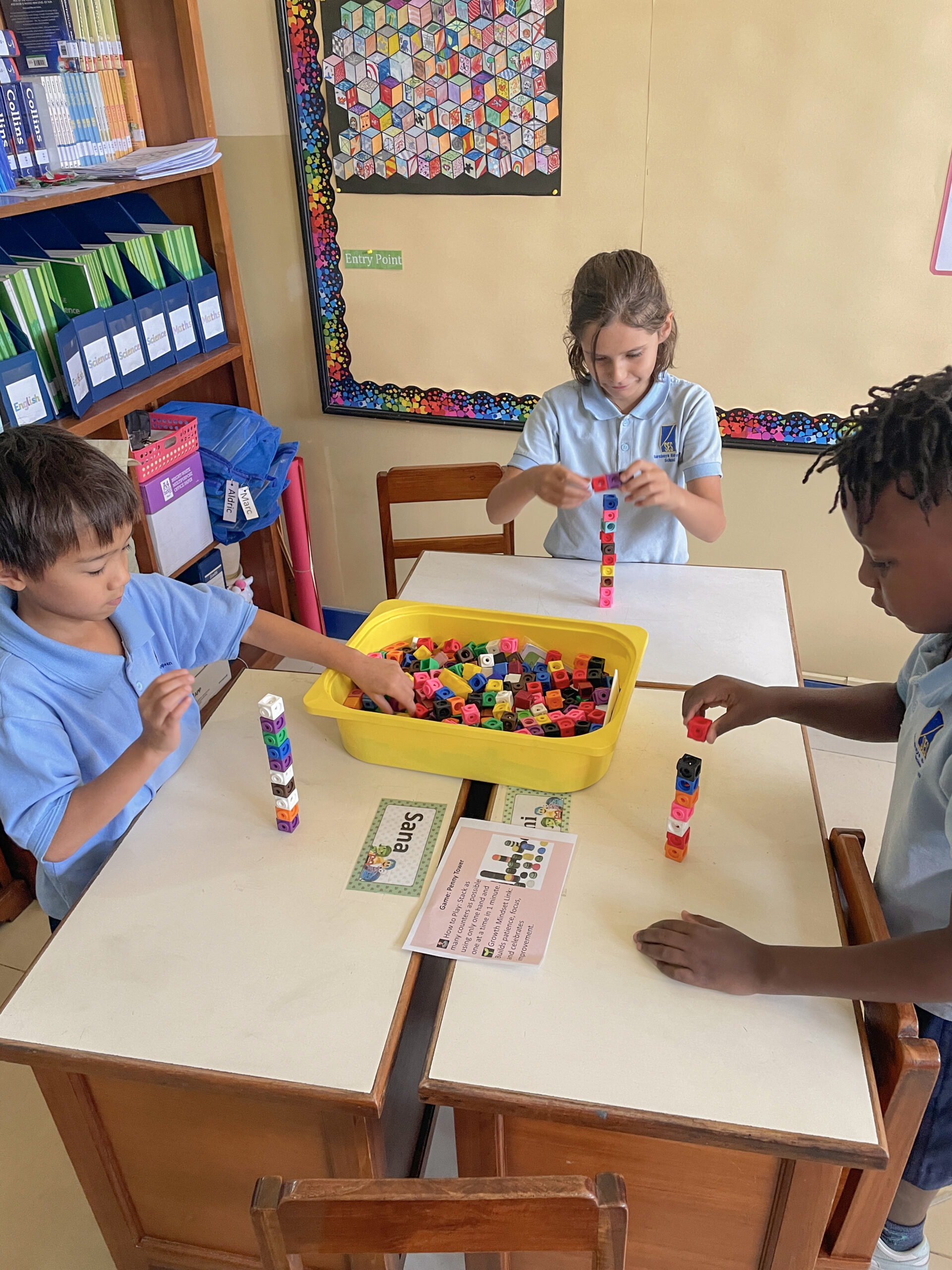
- Problem-Solving and Creativity: Building tall, steady towers from colourful cubes pushed pupils to think critically, experiment, and find creative solutions to balance and stability.
- Focus and Perseverance: Using chopsticks to pick up small blocks tested fine motor skills and demanded concentration, control, and determination — important qualities for success in any subject.
- Collaboration and Communication: Working alongside classmates gave pupils the chance to share strategies, encourage one another, and celebrate teamwork.
- Resilience and Confidence: Each challenge reminded students that mistakes and setbacks are part of learning, helping students build the confidence to try again.
More Than Just Games: Living the IPC Personal Goals
The International Primary Curriculum highlights personal goals such as enquiry, adaptability, cooperation, respect, and resilience. These playful challenges were a clear reflection of those values in action. Students didn’t just complete activities — they embodied the IPC approach by asking questions, adapting strategies, cooperating with peers, and showing respect for one another’s efforts.
Through these experiences, SES students discovered that every challenge, big or small, is an opportunity to grow. They learned that success is not only about the end result but also about the journey of problem-solving, persistence, and teamwork.
Growing Beyond the Classroom
While these activities took place inside the classroom, the lessons stretched far beyond it. By challenging their brains in fun and engaging ways, SES students developed essential life skills that will guide them through future academic tasks and real-world challenges alike.
At Surabaya European School, Challenging Our Brains is more than a set of activities. It is a reminder of the school’s commitment to holistic education, where learning is active, values-driven, and always connected to the wider world. Through this approach, SES continues to empower its students to become reflective, resilient, and internationally minded students — ready to embrace challenges with confidence and creativity.